

From Dakar to Abu Dhabi: Reflections on the 2026 UN Water Conference Preparatory Process
A report by Pan Ei Ei Phyoe

Pan Ei Ei Phyoe is a climate and water specialist pursuing her doctorate in Geography and the Environment at the University of Oxford. Her current research develops an interdisciplinary framework to assess water managers’ climate information and service needs in regions vulnerable to climate extremes. She is committed to uncovering and advocating for integrated water management strategies that address water scarcity and climate change vulnerabilities, aiming to secure a sustainable and resilient future.
On 26–27 January 2026, I attended the High-Level Preparatory Meeting for the 2026 United Nations Water Conference in Dakar, Senegal, co-hosted by the Governments of Senegal and the United Arab Emirates. The meeting brought together governments, UN agencies, international organisations, civil society, academia, youth, and Indigenous Peoples to initiate political alignment around the six Interactive Water Dialogue themes that will shape the substantive agenda of the UN Water Conference in Abu Dhabi in December 2026. I was also able to participate in the UN Department of Economic and Social Affairs (UN DESA)-led multi-stakeholder engagement on 25th January. This was convened in partnership with the African Civil Society Network on Water and Sanitation and the German WASH Network as a dedicated platform to provide space for civil society, youth, Indigenous Peoples, women’s groups, persons with disabilities, technical experts, and private-sector actors to exchange perspectives and help inform the official UN-Water process.
Framed as a “conference of implementation,” the Dakar meeting signalled a political shift: from reaffirming commitments made in 2023 to an emphasis on demonstrating tangible progress, accountability, and system-wide acceleration in water. Here is my assessment of where the 2026 process stands and what must happen over the coming year if the Conference is to deliver on its implementation-oriented ambition:
A Political Signal. But Not Yet a Blueprint: The 2026 UN Water Conference builds on the momentum of the 2023 UN Water Conference in New York and coincides with the final phase of the UN Water Action Decade (2018–2028). In Dakar, the co-chairs of the six Interactive Dialogues were formally introduced, and preparations toward Abu Dhabi were officially launched.
The political tone was confident. Member States broadly acknowledged that, in 2026, commitments must translate into measurable progress. Yet while ambition was evident, many structural components remain under development, including Terms of Reference, consultation modalities, and clarity on how stakeholder inputs will shape outcomes. The co-hosts and dialogue co-chairs are now collaborating to develop a “Roadmap from Senegal to UAE” to guide the preparatory phase. Dakar therefore functioned primarily as a signal-setting moment rather than as a detailed operational-planning session. The direction is clear; the governance architecture is still taking shape.
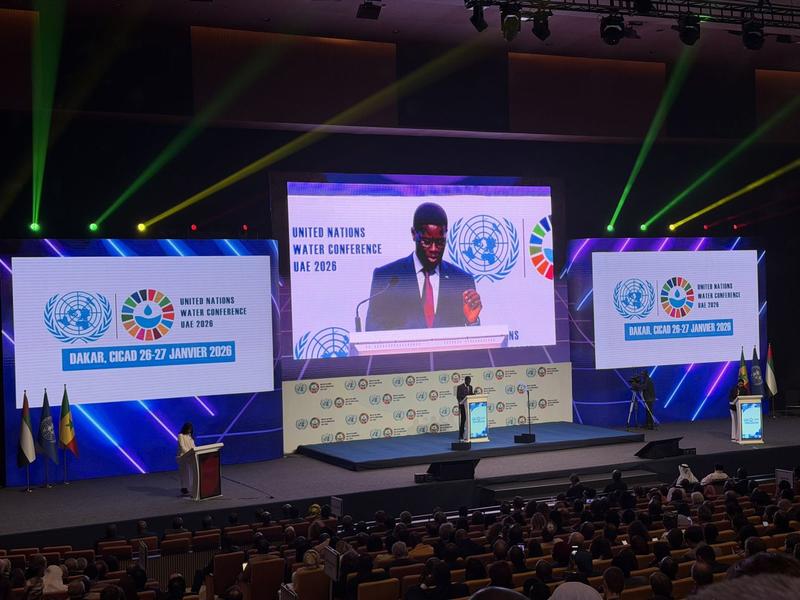
UN Water 2026 High Level Preparatory Meeting, Dakar. Photo credit: Pan Ei Ei Phyoe
Finance Is Ascending. But Governance Must Keep Pace: Finance featured prominently across several Interactive Dialogues, particularly under “Investments for Water.” Discussions emphasised mobilising capital, scaling public–private partnerships, and strengthening the role of multilateral development banks. This reflects a broader shift: water is increasingly framed as a macroeconomic stability issue, rather than solely a social or environmental priority. Such reframing could elevate water within finance ministries and unlock larger pools of capital.
However, concerns were raised about absorptive capacity, governance readiness, and the risk of an overly technocratic narrative dominating the Conference. While scaling investment is essential, the link between financial mobilisation and equitable, sustainable implementation remains insufficiently articulated. Without accountability mechanisms, performance tracking, and social safeguards, financial ambition may outpace institutional capacity. Implementation cannot be achieved through capital flows alone; it also depends on governance integrity.
Freshwater Ecosystems: Present, Yet Peripheral: Although “Water for Planet” features prominently within the Conference’s thematic framing, freshwater ecosystems and integrated watershed management approaches did not receive sustained attention in Dakar. Nature-based solutions were referenced, yet often without depth or integration into mainstream finance discussions. This gap is significant. Water security cannot be separated from watershed health. Ecosystem buffering, groundwater recharge, soil restoration, and green–grey infrastructure integration are central to resilience in a climate-stressed world. At the same time, ecosystem approaches should not be framed as a panacea, but as part of a balanced portfolio alongside conventional infrastructure and public health systems.
As preparations move toward Abu Dhabi, strengthening the ecosystem dimension will require proactive engagement in upcoming consultations. If the 2026 Conference is to demonstrate implementation, ecosystem resilience must be embedded in both governance and financial frameworks, rather than treated as a secondary narrative.
Inclusion and Participation: Structural Barriers: Inclusion emerged as one of the most pressing operational challenges. Whilst the Dakar meeting included a dedicated stakeholder engagement day, this does not automatically guarantee meaningful participation in December 2026. Although the ability to attend the UN WATER Conference through special accreditation will help buffer some concerns, ECOSOC accreditation requirements, complex validation processes, limited travel funding, and anticipated high venue costs were posed as tangible barriers. There is also a risk of replicating the separation between formal UN proceedings and parallel civil society spaces, as seen in 2023. Participants underscored that non-state actors will need to organise proactively to secure formal engagement pathways in addition to the co-host-led processes. Implementation must be inclusive by design, not merely consultative in appearance.
The Year Ahead: Strategic Engagement Matters: Several milestones in 2026 were identified as strategic entry points: the UN-Water meeting in Rome, regional forums convened by UN Economic Commissions, the SDG 6 Review at the High-Level Political Forum, the Dushanbe Water Process, and continued engagement with Interactive Dialogue co-chairs. These moments provide opportunities to strengthen narrative coherence, better integrate ecosystem resilience, and advocate for accountability mechanisms that link commitments to measurable outcomes. Implementation will not be determined solely in December; it will be shaped through sustained engagement across the preparatory process.
Beyond 2028: The Governance Question: A central theme emerging from Dakar was the future of global water governance beyond 2028, when the UN Water Action Decade concludes. Several countries raised concerns that the current global water architecture lacks coherence and durability beyond the 2030 Agenda. Proposals ranged from strengthening General Assembly anchoring to developing a longer-term multilateral framework for water governance. However, no consensus has yet emerged on what such a mechanism should look like.
Notably, the Water Action Agenda launched in 2023 was not substantially revisited in Dakar. This absence raises questions about continuity and accountability. If 2026 is to be a genuine conference of implementation, greater clarity will be needed on how existing commitments are tracked, synthesised, and integrated into future frameworks. Durable implementation requires institutional memory and structural coherence alongside renewed political momentum.
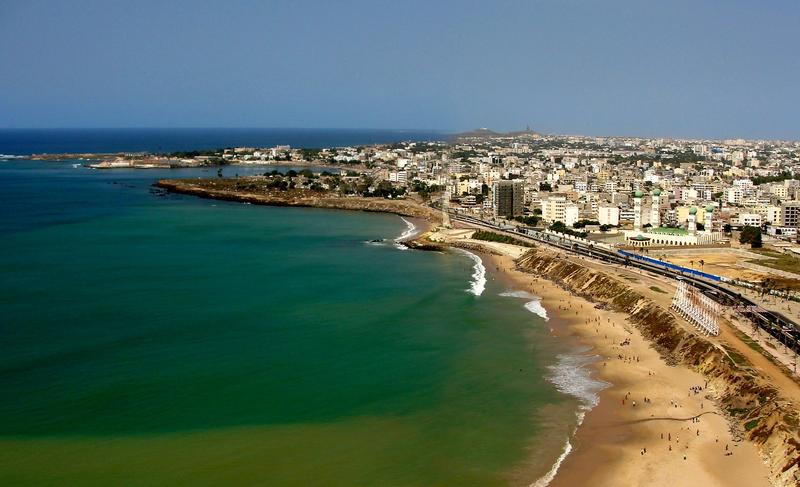
Dakar, Senegal Credit: Jeff Attaway via Flickr. CC BY 2.0
In conclusion, the preparatory meeting in Dakar demonstrated a clear political appetite to advance global water governance. Yet appetite alone does not produce architecture. Finance without accountability will not deliver resilience. Without inclusion, the process will not produce equity. As the 2026 UN Water Conference approaches, the central challenge is aligning ambition with durable governance structures that extend beyond 2028 and 2030. Whether Abu Dhabi becomes a turning point in global water governance or another high-level convening without structural follow-through will depend on how seriously these gaps are addressed in the year ahead.
The process has begun. The work now lies in shaping it.

